
Must a Good Father Always Stay?
by Oscar G. Miranda
“It can be hard work looking after kids…
Sometimes mums just need 20 minutes.”
—Chilli, Bluey

African Jacana and young chick crossing a lily pad. © Sabine Stols
When inward care is unavailable
Keri Lodge found her father, Peter, and her brother, David, lying beside one another on the living-room floor.
Peter was dead. He had died as many as four days earlier from complications of an undiagnosed gastric ulcer. David, who was blind, non-speaking and had complex disabilities, had been unable to summon help. Severely dehydrated and suffering from pneumonia, he died shortly after being found.
For decades, Peter had devoted his life to caring for his son. Even at 74, he slept on the floor beside David’s hospital bed. He had no weekends, sick leave or holidays, and only one regular period of respite each week.
When Peter died, there was no effective contingency plan for the person whose survival depended upon him. The tragedy was not that Peter cared too much. It was that the entire system of care depended upon one person remaining permanently available—and never becoming ill, exhausted or unable to continue.
When the caregiver collapsed, the caring system collapsed with him.
Peter and David’s story exposes a second meaning hidden within the phrase parental care. Biologists normally use the term to describe care flowing outwards, from parents towards their offspring. But sustainable parental care also requires something to flow in the opposite direction: care for the parent, including opportunities to eat, rest and maintain their own health.
This inward care is not selfishness. It helps preserve the person upon whom continued outward care depends. Without it, devotion can consume the caregiver and make the entire caring system more vulnerable.
This raises an uncomfortable question: must a good father always stay?
On the wetlands of Lake Hawassa in Ethiopia, another father confronts his own version of this allocation problem. He is much smaller, covered in feathers and responsible for incubating an entire clutch alone.
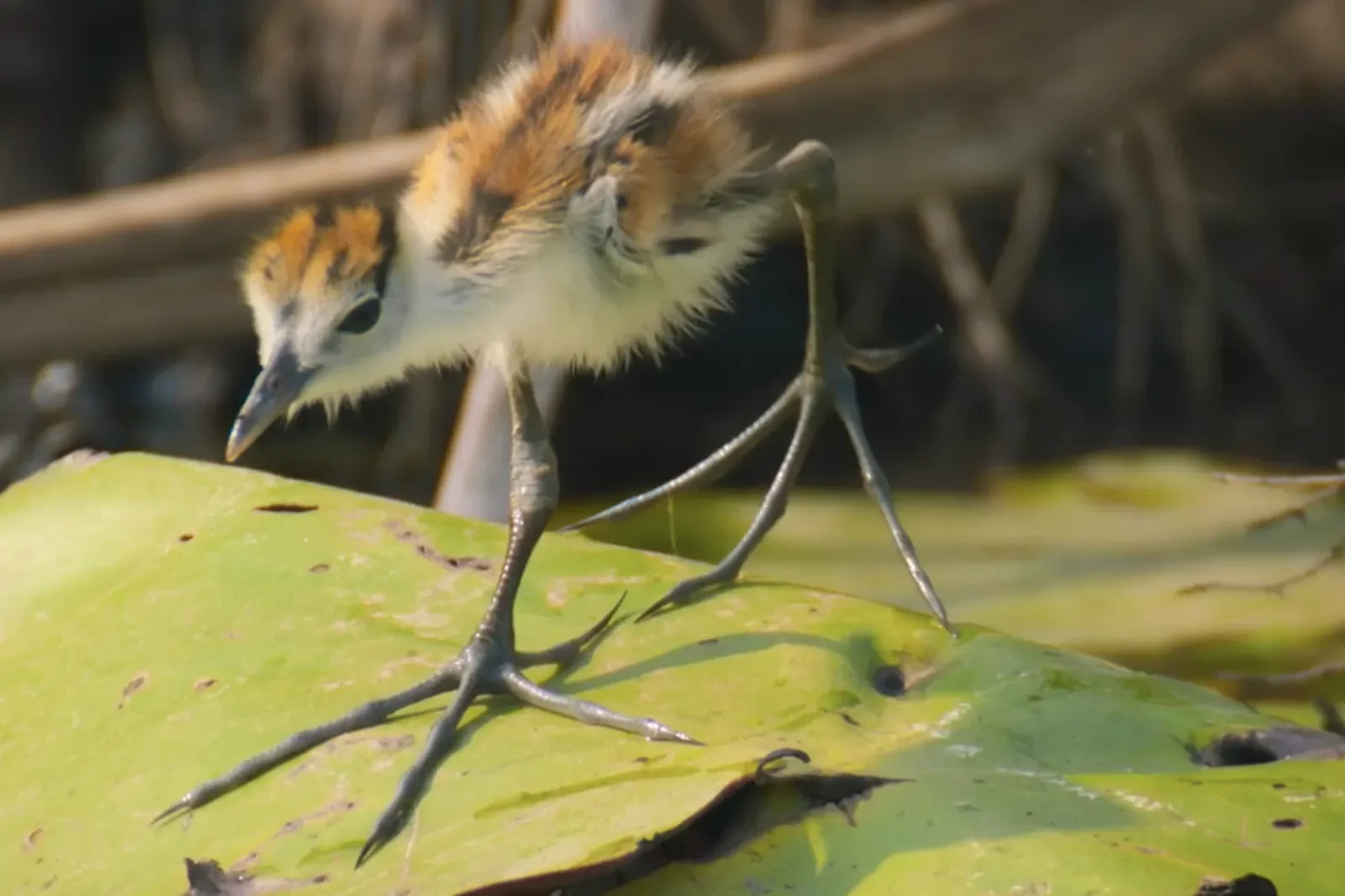
A screenshot of an African jacana chick from the National Geographic/Disney+ documentary series Super/Natural. The chicks are born with giant feet that help them to walk on floating vegetation.
The single-father allocation problem
African Jacanas (Actophilornis africanus) are among the birds with reversed sex roles. Females are larger, compete with other females and may mate with multiple males. Once a clutch has been laid, however, the male assumes responsibility for incubation and, later, much of the care of the chicks. He becomes, in effect, a single father.
Incubating alone creates a conflict. Remaining on the nest protects the eggs and regulates their temperature, but every minute spent incubating is also a minute unavailable for feeding and maintaining the body that must complete the reproductive attempt.
How does a jacana father solve this problem?
A recent study by three members of our team—Wondimu Ersino Ayano, Zsolt Végvári and Tamás Székely—offers part of the answer.
Across 480 hourly observation periods at 20 African Jacana nests, the researchers found that males incubated for approximately 86% of the night but only 52% of the day. Around midday, attendance fell even further, to approximately 22 minutes per hour.
At first sight, that sounds remarkably low. The male is responsible for the entire clutch, yet during the hottest part of the day he may be absent considerably longer than he is present.
What was happening?
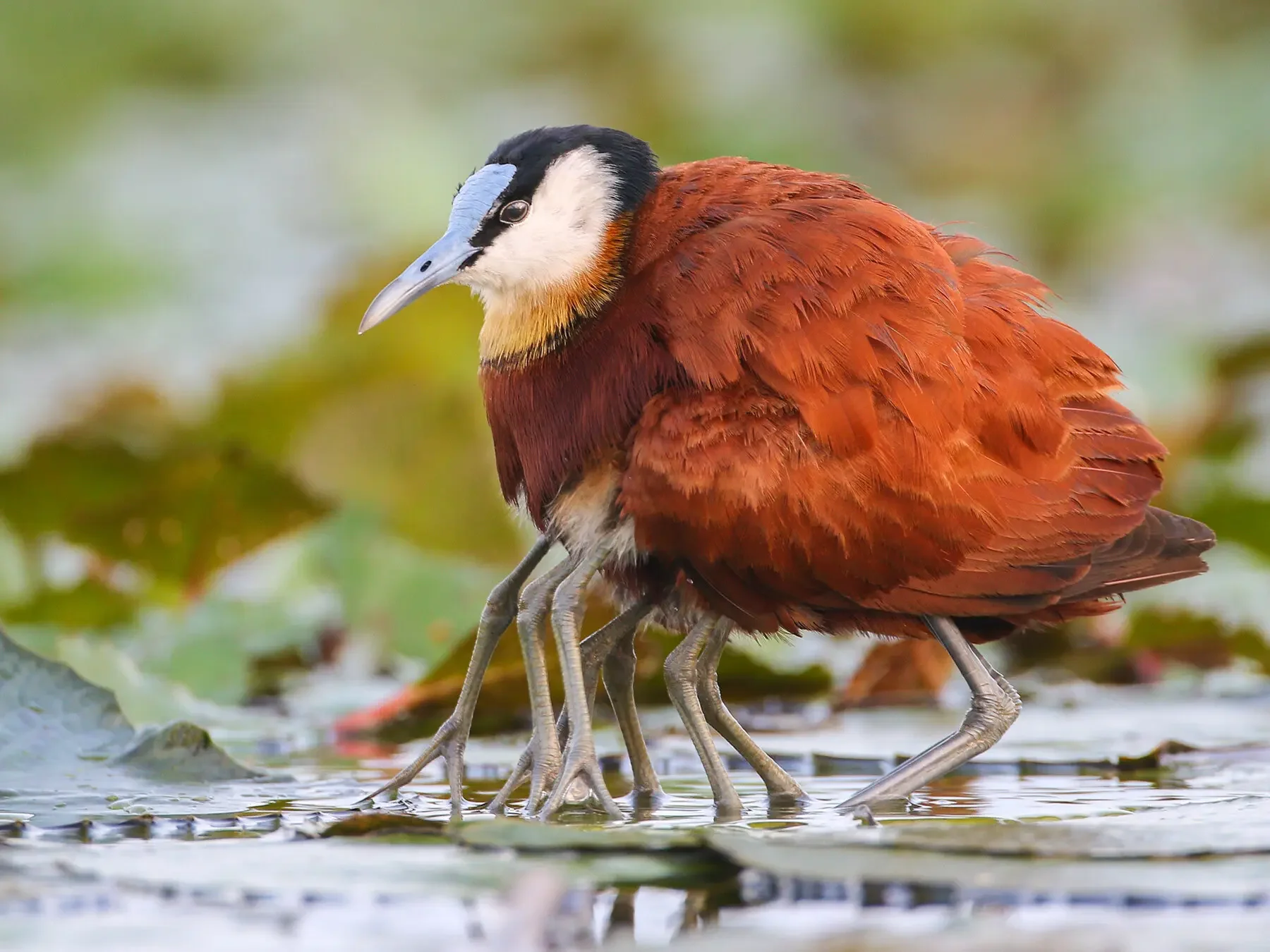
Picture from Birdfact (https://www.birdfact.com/birds/african-jacana)
When leaving becomes part of caring
The researchers tested whether environmental conditions were associated with these changes in male attendance. Their analyses showed that, as temperatures increased, males spent less time in contact incubation and took recesses more frequently. Under stronger winds, they attended their nests more.
The jacana fathers therefore appeared to respond to changes in how much contact incubation was required. During the cooler night, their body heat was probably more important for maintaining suitable conditions for the eggs, so they remained on the nest for longer. During warmer periods, the surrounding environment may have temporarily performed part of that thermal work, allowing the males to leave and feed.
The sun became a kind of silent co-parent.
That does not mean that warmth is always beneficial. Excessive heat can also endanger embryos, and its effects may depend on wind, solar radiation, nest structure and the thermal properties of the eggs. The important point is that the value of the father’s presence changes from one hour to another.
The study did not directly measure the energetic condition of the males, egg temperatures or the survival consequences of individual recesses. We therefore cannot conclude that the observed routine was optimal. Nevertheless, the behaviour suggests that males do not simply maximise their presence. Instead, they adjust it according to the conditions surrounding their nests.
Leaving is not necessarily the opposite of parental care. Under suitable conditions, it may be part of a sustainable caring strategy.
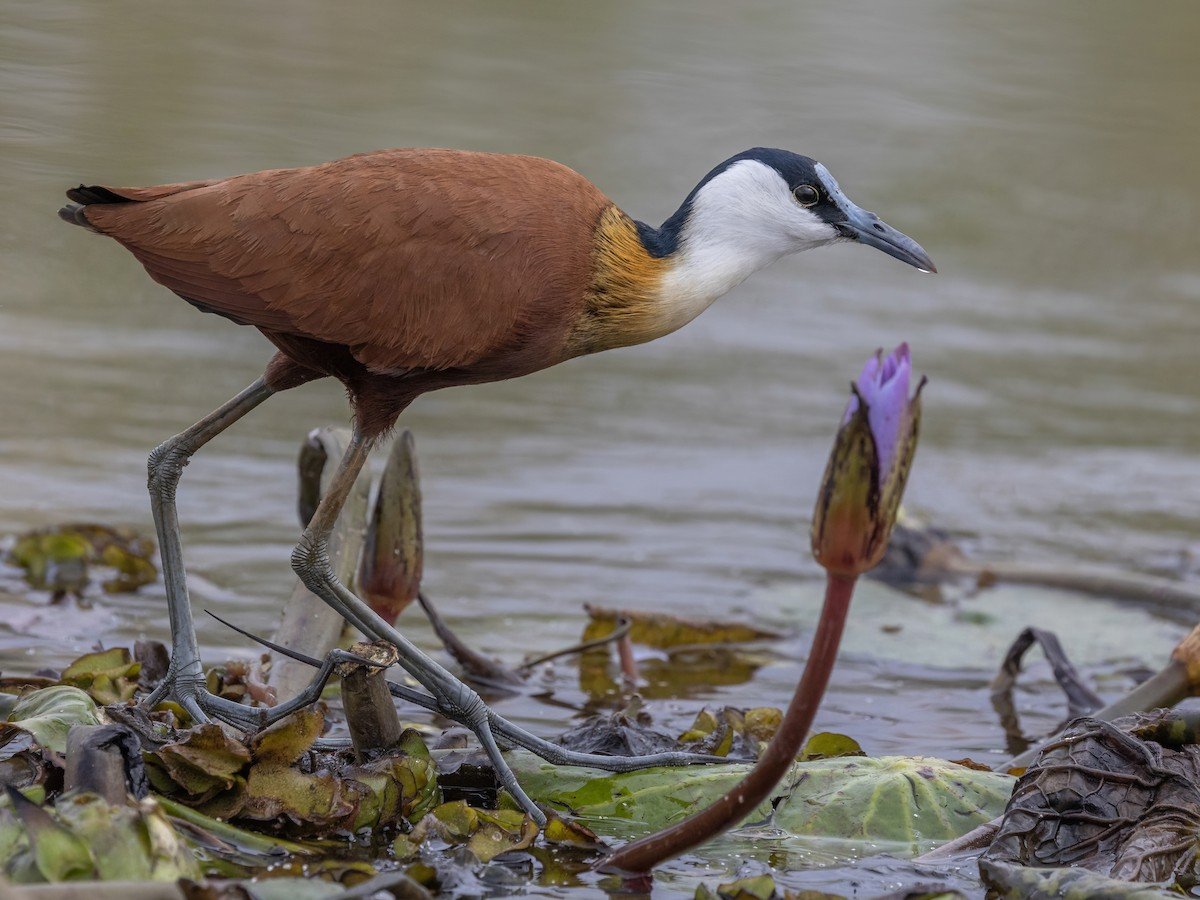
Picture from Birds of the World (https://birdsoftheworld.org/bow/species/afrjac1/cur/introduction)
Who cares is not the same as how costly care is
This distinction creates an important problem for how scientists compare parental care among species.
African Jacanas would be classified as showing extremely male-biased care because males perform effectively all the incubation. But that classification tells us who is responsible—not how demanding that responsibility is.
Imagine two species with male-only incubation.
In the first, cold and unpredictable conditions require the male to remain on the eggs for most of the day, leaving little time to feed. In the second, the eggs can safely remain unattended for longer periods. Both species are classified as having male-only care, but the energetic and opportunity costs experienced by their males may be radically different.
For example, male Red-necked Phalaropes (Phalaropus lobatus) in an Alaskan population attended their nests for approximately 81% of the observation time—substantially more than the daytime attendance recorded in the African Jacanas. However, differences in methods, habitats and observation periods mean that this cannot be treated as a controlled comparison.
The jacana study therefore suggests that we should distinguish between the division of care and the absolute burden of care.
This distinction might also explain why previous comparative studies have found only weak relationships between climate and avian sex roles. Such studies have often represented the environment using broad variables such as mean breeding-season temperature, precipitation or habitat productivity. These variables describe the general environment surrounding a bird, but they do not necessarily measure the practical constraint experienced by an incubating parent.
A climatic average cannot tell us whether eggs can safely be left for twenty minutes.
Two populations could experience the same mean breeding-season temperature but have very different nest microclimates, winds, daily temperature fluctuations and opportunities for recesses. When those differences are compressed into broad environmental averages, an important biological mechanism may disappear statistically.
This does not mean that previous comparative results were wrong. Instead, the jacana study identifies a possible measurement gap: comparative studies usually ask which sex cares, whereas local environmental conditions may first determine how costly that care is.
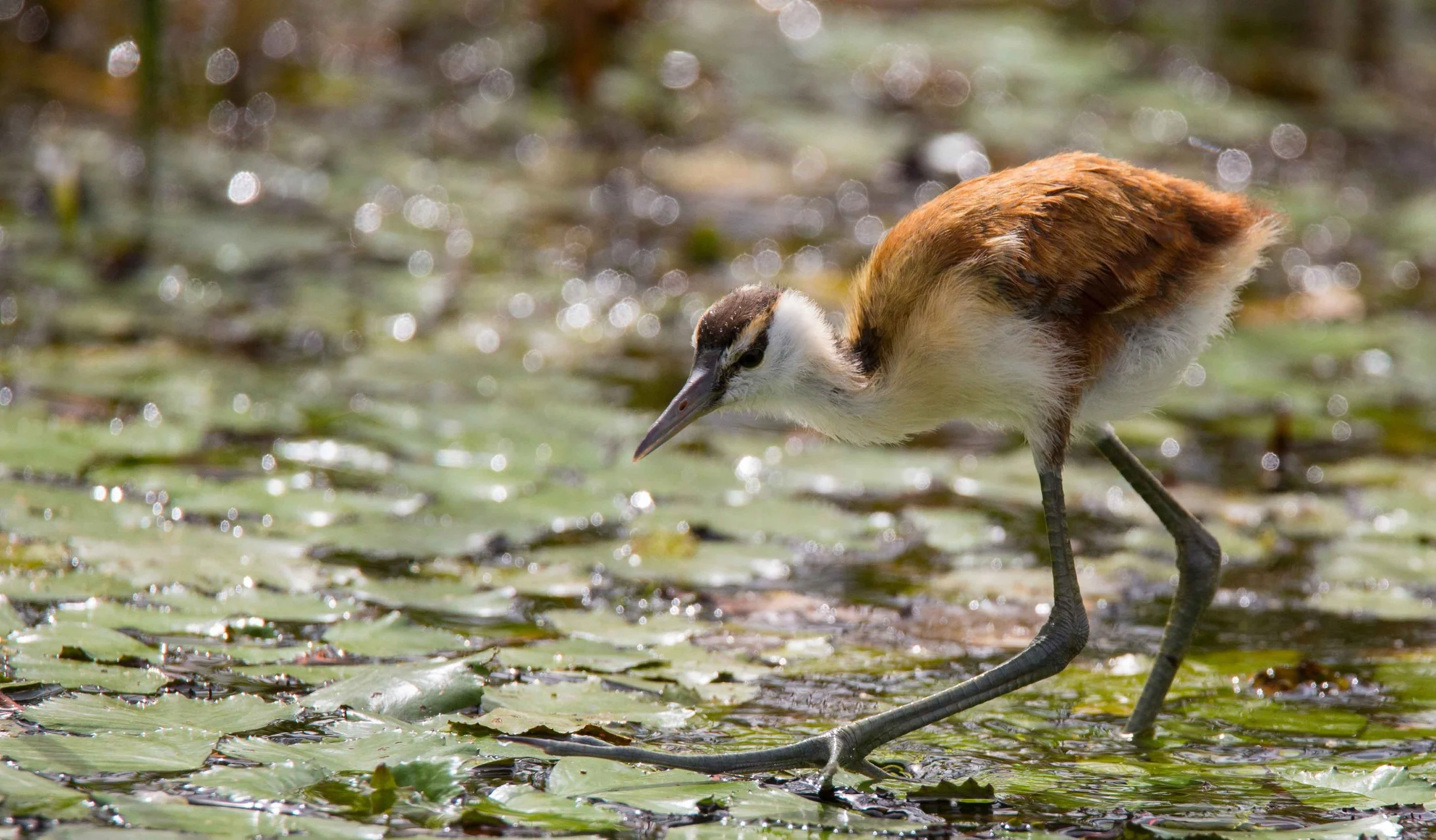
© Beate Schwippert
The ecological feasibility of single parenthood
Sex-role specialisation may become more feasible where local environmental conditions allow one parent to care for offspring while also maintaining itself. The relevant variable may therefore not be simply whether a location is warm, cold, wet or productive.
It may be the amount of freedom the environment gives a parent to leave.
We might call this safe recess capacity: the amount of time that eggs can remain unattended without a meaningful reduction in survival or development.
Where safe recess capacity is high, one parent may be able to complete incubation alone without reaching its physiological limits. This could make it easier for the other parent to desert, seek another mate or invest elsewhere.
Ecology, however, cannot necessarily predict which parent will leave. Adult sex ratio, breeding density, paternity and the remating opportunities available to males and females may help determine which sex benefits from desertion. Ecology may determine whether solo care is feasible; the social environment may help determine who provides it.
This hypothesis could be tested by comparing populations and species using direct measurements of nest temperature, egg cooling rates, wind, solar radiation, food availability, parental energy expenditure and safe recess duration.
It predicts that longer safe recess windows should reduce the absolute cost of solo incubation and make strongly asymmetric parental roles more feasible. If directly measured safe recess capacity fails to predict solo care or care asymmetry—particularly after accounting for adult sex ratio and breeding density—the hypothesis would be weakened.
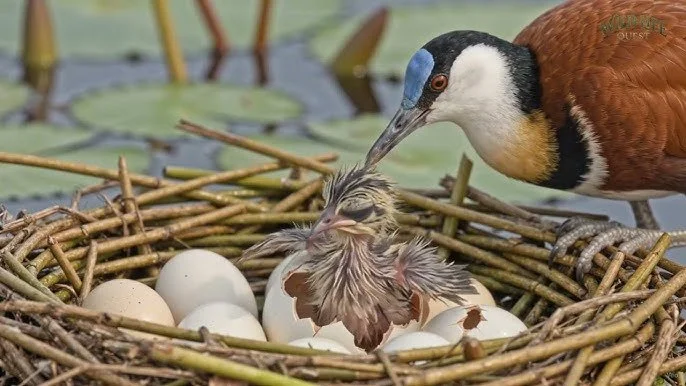
Screenshot from (African Jacana: Nesting, Foraging, and Protection Cycles https://www.youtube.com/watch?v=MaIGR1RB0F0)
So, must a good father always stay?
African Jacanas cannot tell humans how to raise children. Their behaviour is not a moral lesson, and leaving eggs temporarily is not equivalent to the complex decisions faced by human parents.
But they expose a more general mistake in how we think about care.
We often treat visible presence as care itself. Yet continued care also depends on everything that makes presence possible: food, rest, health, support and the wider environment surrounding the caregiver.
The male jacana leaves because his body also belongs to the caring system. Feeding himself is not separate from protecting his eggs. It helps him remain capable of returning to them.
A good father, then, does not necessarily always stay.
Sometimes he stays because his presence is indispensable. Sometimes he leaves because the surrounding environment provides a safe opportunity. The important question is not simply whether he leaves, but whether leaving protects or endangers those who depend upon him.
Peter’s problem was not that he stayed. It was that he was given almost no safe opportunity to leave.
Parental care is care provided by parents. But sustainable parental care must also include care for parents. Human societies therefore have a responsibility to create conditions in which parents—whether partnered or caring alone—can rest and attend to their own needs without placing their dependants in danger.
In nature, warmth may sometimes provide a father with respite. In human societies, that respite must be created by us.
The study, “Environmental drivers of incubation routine in a sex-role reversed shorebird”, was published in Ostrich: Journal of African Ornithology by Wondimu Ersino Ayano, Zsolt Végvári and Tamás Székely. Read the paper here: https://doi.org/10.2989/00306525.2026.2699397