
How many babies did T. rex have—and could they fend for themselves after hatching?
by Oscar G. Miranda
“Don’t put all your eggs in one basket” is usually financial advice. In evolutionary biology, however, it describes a fundamental reproductive dilemma remarkably well.
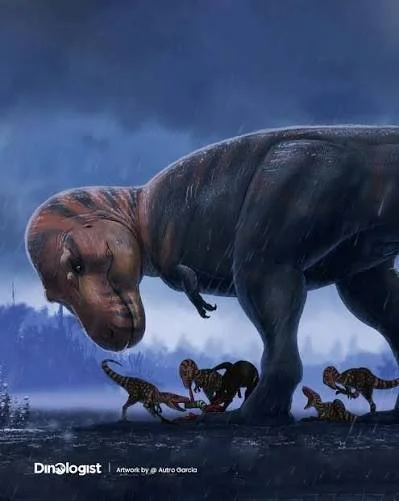
Go big or go many
Every organism has limited resources. Parents can spread those resources across many relatively small offspring, accepting that most may not survive, or concentrate them in a few larger offspring and invest more heavily in their survival. What they cannot do is maximise both offspring number and investment per offspring simultaneously.
Among living reptiles, we can see very different solutions to this trade-off. Many turtles and lizards produce numerous small offspring and provide little or no care after laying their eggs. On the contrary, birds generally produce fewer, relatively larger offspring, and parental care, from protecting nests to feeding dependent chicks, is widespread.
But how did these contrasting reproductive strategies evolve? Fossils of non-avian dinosaurs can reveal combinations of reproductive traits that no longer exist among living animals. The challenge is finding evidence from the most fragile and poorly preserved stages of their lives: eggs, embryos and newly hatched dinosaurs.
Recently described fossils of the “ultimate dinosaur” have shown that the evolutionary story was not quite as black and white as “go big or go many”.
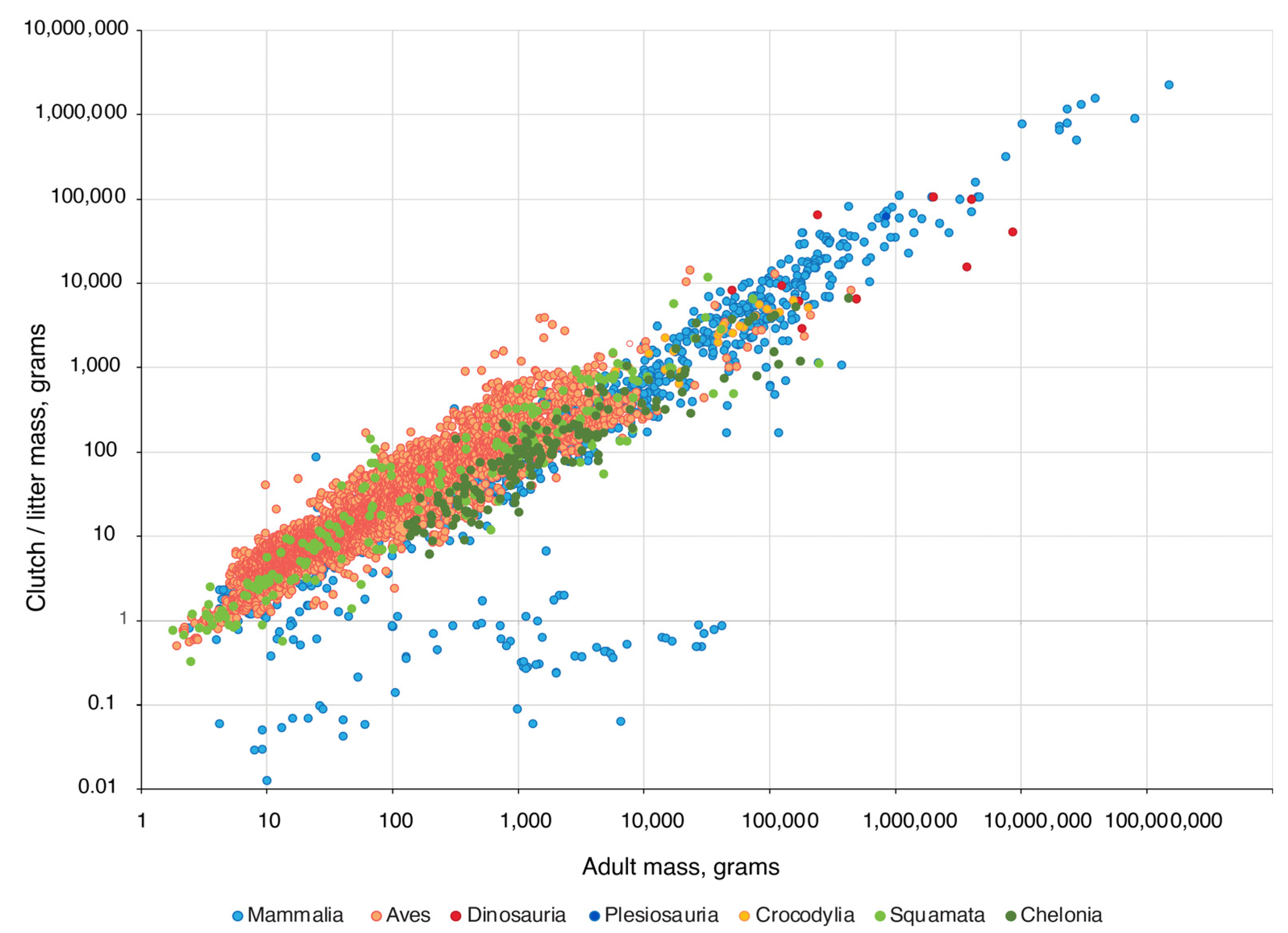
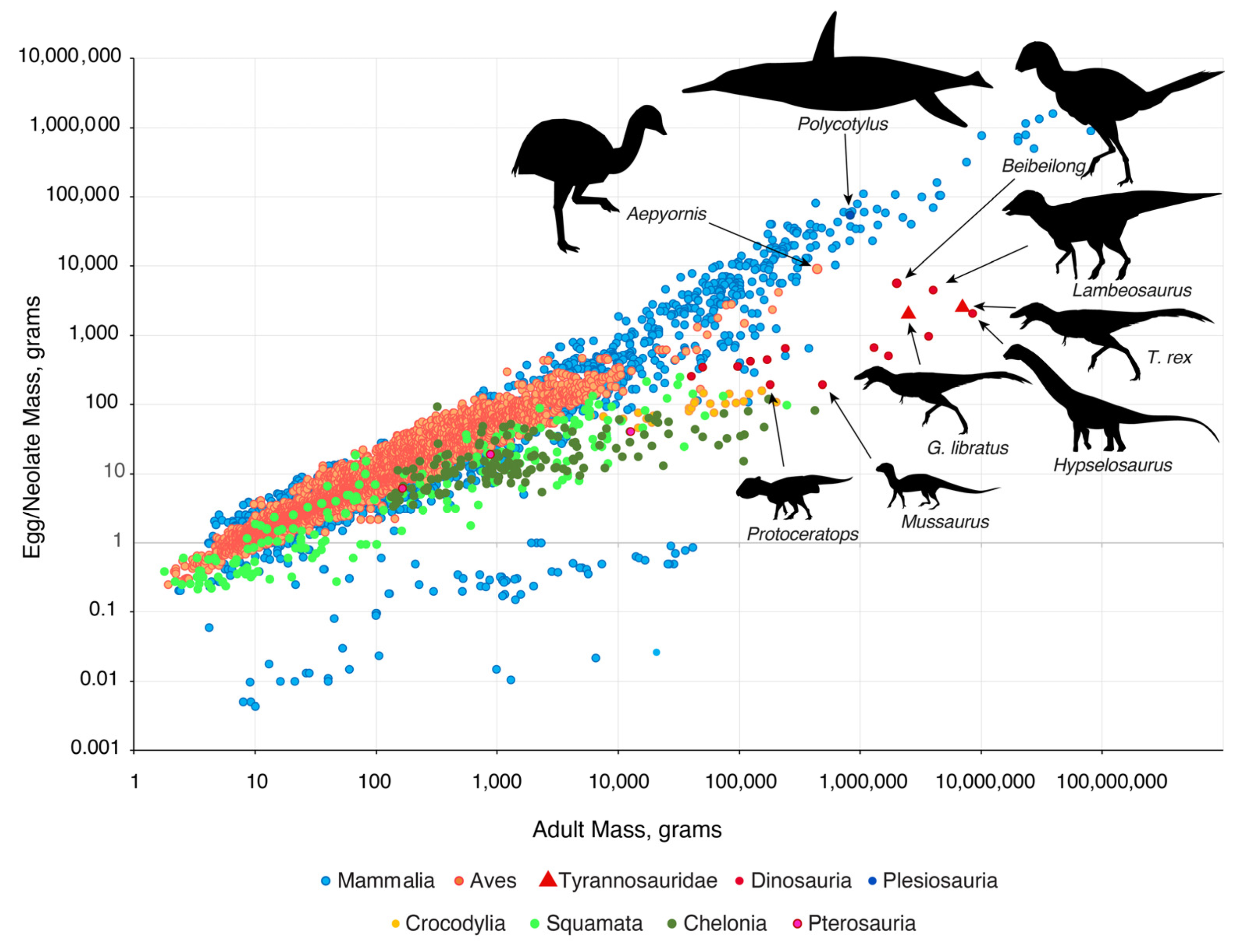
Clutch/litter mass versus body mass for dinosaurs and other amniotes. Amniotes show a strong positive correlation between clutch/litter mass and body mass. Marsupials form the cloud below the other mammals.
Reconstructing the reproductive strategies of the “tyrant lizards”
Working out how animals reproduced more than 65 million years ago requires assembling palaeontological clues scattered across different museums and scientific collections.
From two tiny foot bones, a fragment of jaw and a collection of shed teeth, researchers led by palaeontologist Nicholas Longrich reconstructed the earliest lives of Tyrannosaurus rex and Gorgosaurus libratus.
The fossils were not discovered together. They came from several Late Cretaceous formations across western North America and were preserved in different museum collections. Their scientific importance emerged only when the researchers connected the pieces and examined them using anatomical comparisons, bone histology and synchrotron micro-CT scanning.
Using the fossils to constrain hatchling and egg size, and comparative relationships from living birds and crocodilians, the researchers estimated how many eggs tyrannosaurids might have laid. Under the most conservative scenarios, the results suggest clutches of roughly 15–30 eggs (!), depending on the species and the size of the female. Some models allow for considerably larger clutches, although these estimates should not be interpreted as precise counts.
The important conclusion is not that every T. rex laid a particular number of eggs. It is that none of the plausible models supports a reproductive strategy based on only a few large offspring.
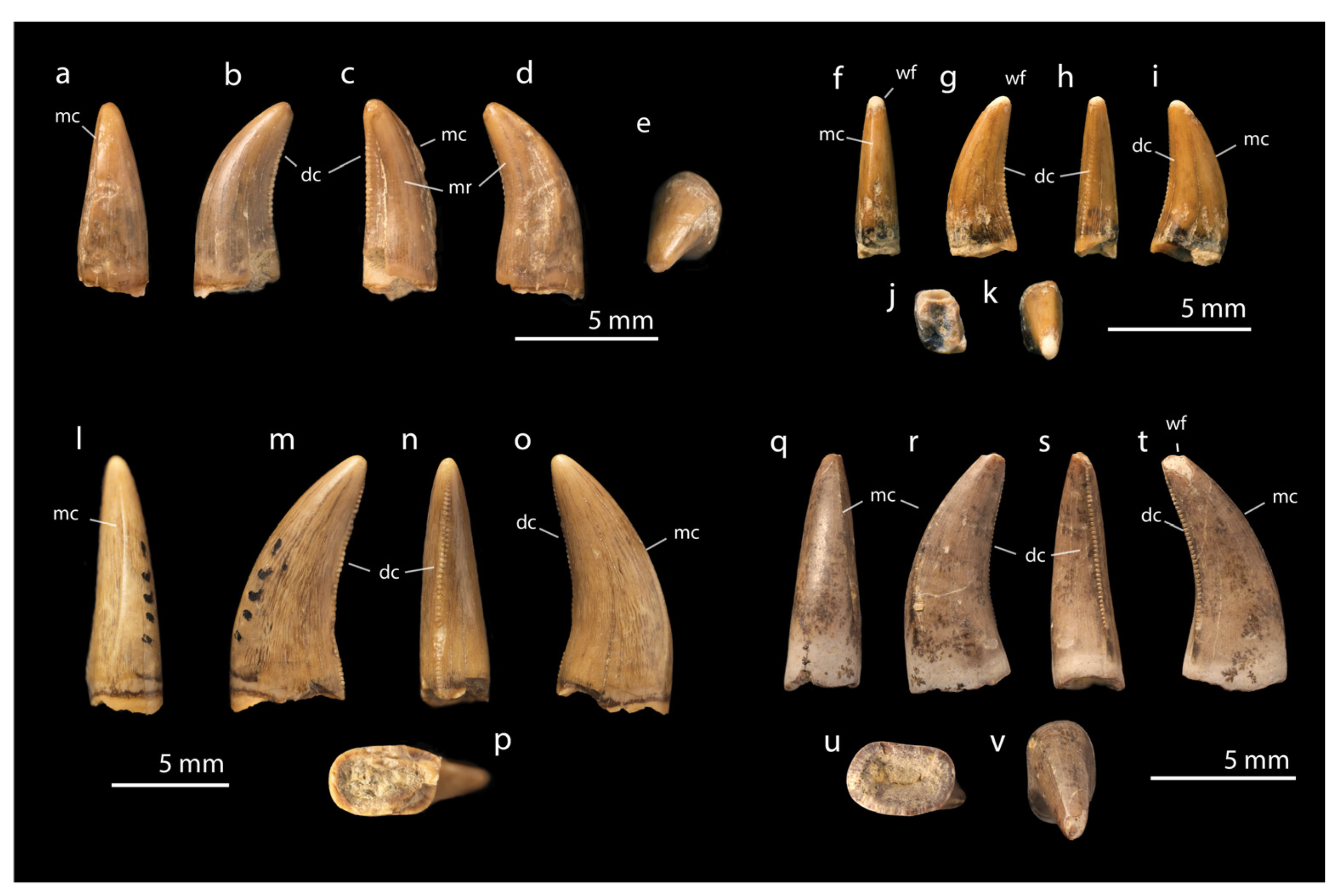
Hatchling T. rex teeth, late Maastrichtian Lance Formation, Wyoming. (a–e) YPM 55604, premaxillary tooth in (a) anterior, (b) lateral, (c) posterior, (d) medial, and (e) apical views. (f–k) YPM 55564, lateral tooth in (f) anterior, (g) lateral, (h) posterior, (i) medial, (j) basal views and (k) ventral views. (l–p) YPM 54474, lateral tooth in (l) anterior, (m) medial, (n) posterior, (o) lateral, and (p) basal views. YPM 55551, lateral tooth in (q) anterior, (r) medial, (s) posterior, (t) lateral, (u) basal and (v) apical views. Abbreviations: dc, distal carina; mc, mesial carina; mr, mesial ridge; wf, wear facet.
How big was a baby tyrannosaur?
The hatchlings described in the study weighed less than 2.5 kg (approximately as much as a small human newborn) and measured around 70 cm in length.
Because the animals probably survived for several weeks or months after hatching, the researchers corrected for the growth that occurred before death. They estimated that a newly hatched T. rex weighed approximately 1.7 kg, while a newly hatched Gorgosaurus weighed around 1.3 kg.
A T. rex hatchling therefore represented less than 0.1% of adult body mass. By comparison, a human newborn represents approximately 5% of adult body mass. Relative to its adult size, a human baby is therefore around 50 times larger than a T. rex hatchling was. The king of the dinosaurs began life surprisingly small.
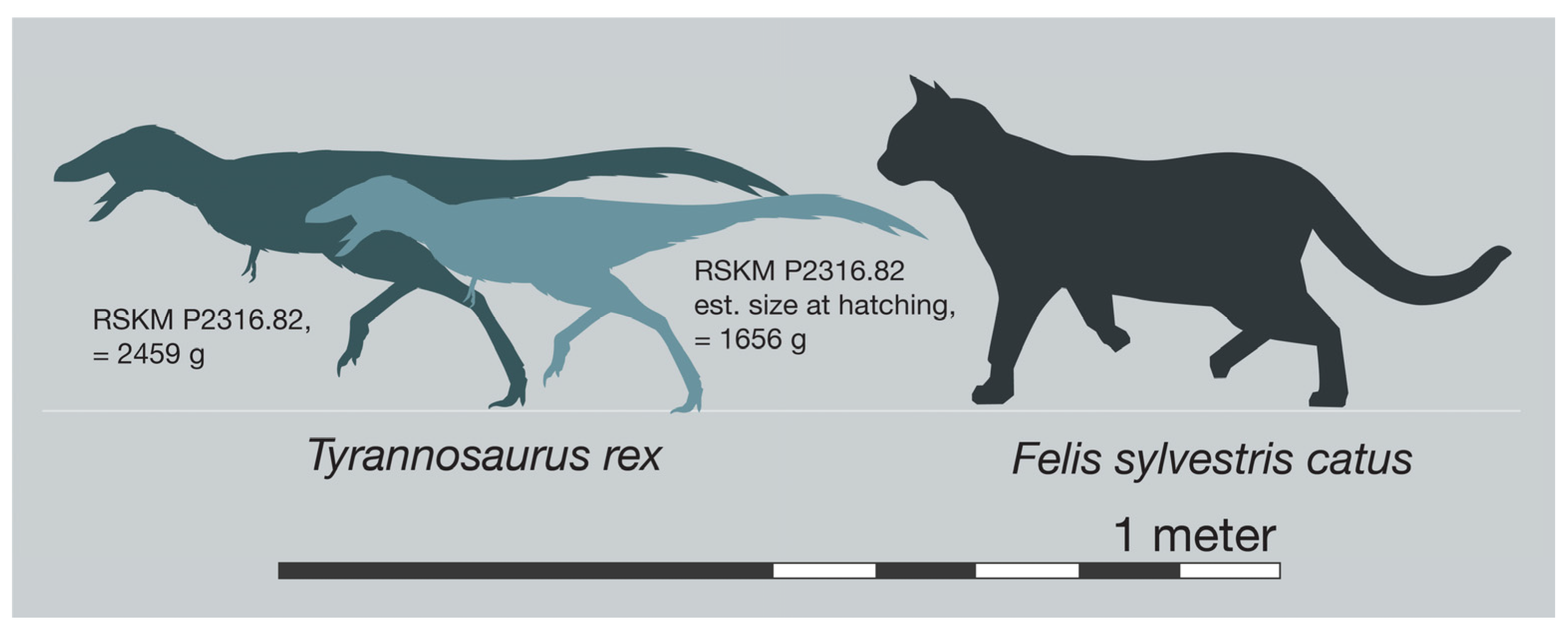
Size of perinate T. rex. Reconstruction based on the third metatarsal RSKM P2416.82, assuming proportions of a juvenile Tarbosaurus baatar; post-hatching individual scaled to 84% of the linear dimensions of RSKM P2416.82.
Did tyrannosaurs care for their young?
The evidence suggests that tyrannosaur parental care was unlikely to resemble the intensive and prolonged provisioning provided by many modern birds to helpless, nest-bound chicks.
First, the internal structure of the hatchling foot bones showed remodelling consistent with repeated mechanical loading. The bones also had well-developed joint surfaces. These features suggest that young tyrannosaurs were already moving around soon after hatching rather than remaining confined to the nest.
Second, wear on their teeth indicates that the hatchlings had already been feeding. The pattern of wear suggests that they may even have consumed relatively large vertebrate prey.
Together, these clues portray young tyrannosaurs as mobile, precocial predators capable of feeding themselves soon after hatching.
That does not mean their parents abandoned them completely. Crocodilians protect their nests and hatchlings, while birds—the only surviving dinosaurs—display widespread parental care. Fossils of other non-avian dinosaurs also provide evidence of adults brooding nests and associating with juveniles.
Tyrannosaur parents may therefore have guarded their nests or protected their hatchlings. However, whether they fed their young, how long care continued and whether one or both parents were involved remain open questions.
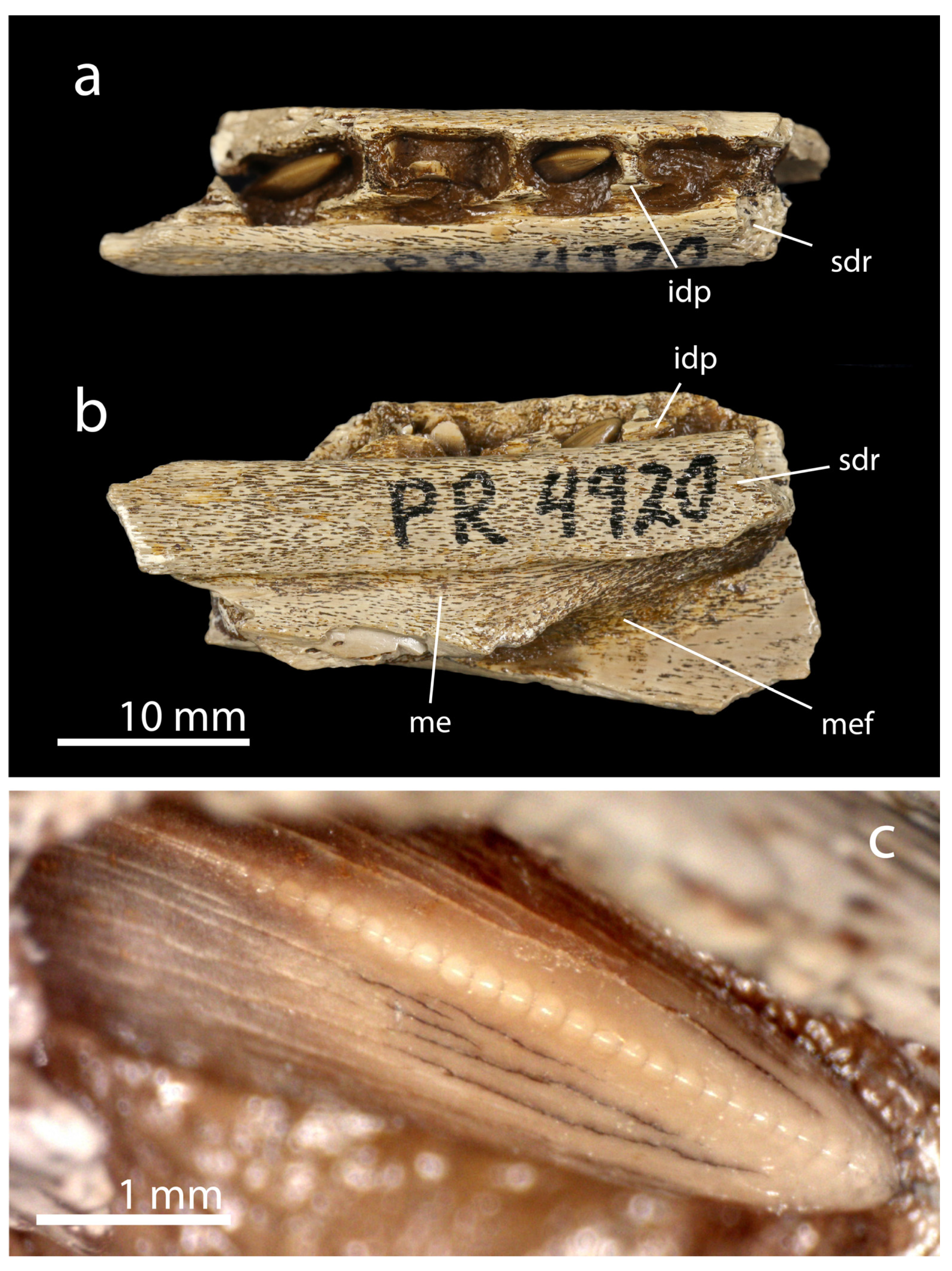
Partial dentary of young T. rex, in (a) dorsal, (b) medial views; (c) closeup of posterior tooth showing large denticles typical of T. rex. Abbreviations: idp, interdental plate; me, Meckelian groove; mef, Meckelian fossa; sdr, subdental ridge.
It was not simply “go big or go many”
Compared with modern birds, tyrannosaurs appear to have produced smaller and more numerous offspring, investing less in each hatchling. In the traditional language of life-history theory, this places them towards the more r-selected end of the continuum.
Yet compared with turtles, crocodilians and other reptiles that often produce large numbers of small young, tyrannosaurs had relatively large hatchlings and probably fewer eggs. Relative to these groups, they were closer to the more K-selected end of the spectrum.
Egg size of tyrannosaurids and other tetrapods. Relative size of eggs/young of dinosaurs, birds, reptiles, and mammals; egg size for Dinosauria, extant and extinct, and inferred egg size for T. rex.
So which were they?
Neither label captures the complete strategy. Tyrannosaurs invested more in individual offspring than many other reptiles, but less than modern birds. The familiar r–K terminology is useful shorthand, but the story of these bone-crushing baby tyrants reminds us that reproductive strategies are not two fixed categories.
Instead, species occupy different positions along several connected axes: egg size, clutch size, offspring development, juvenile survival and parental care. Tyrannosaurs combined relatively large clutches with mobile, self-feeding young and probably some degree of parental protection.
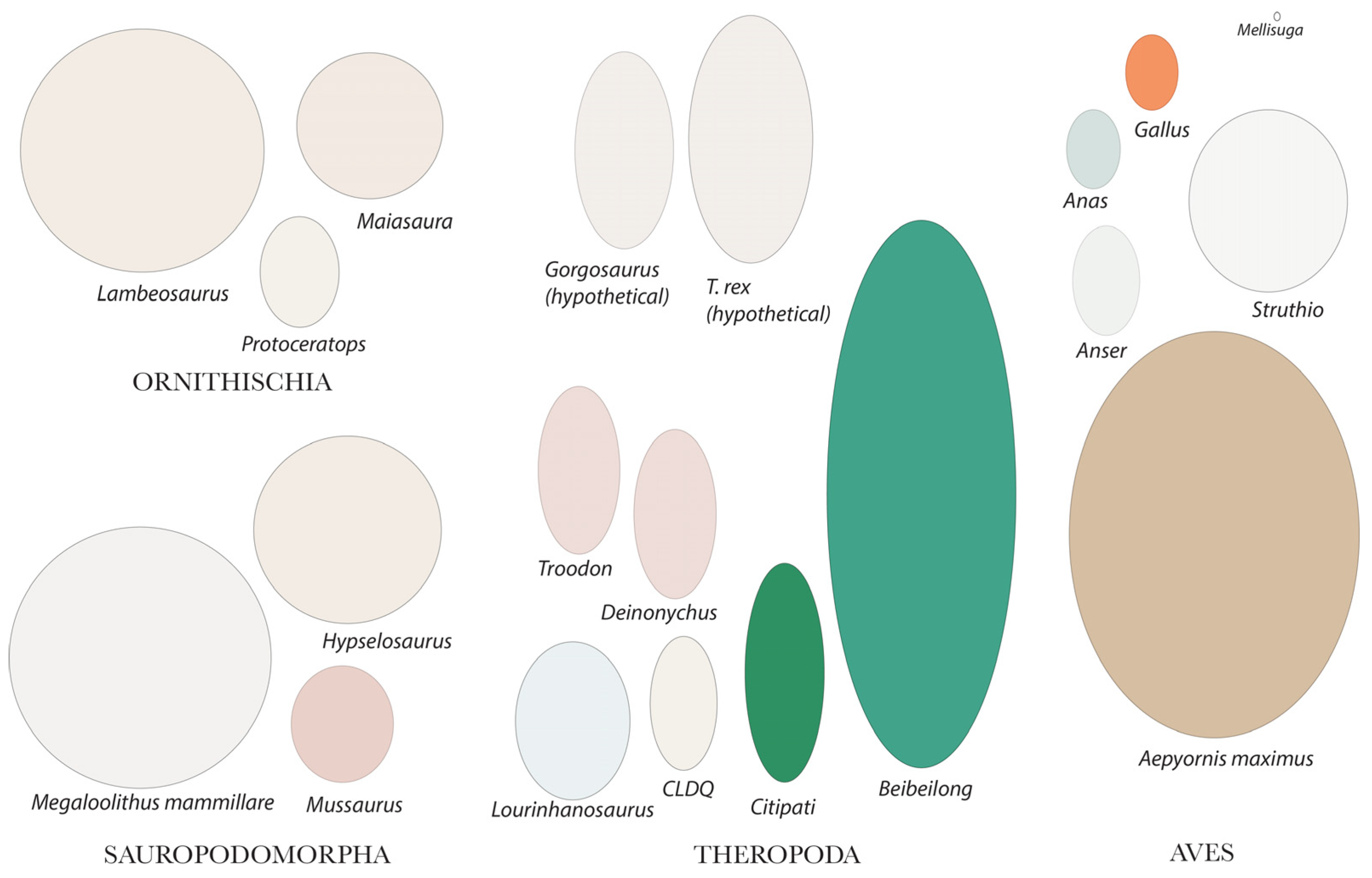
Egg size for Dinosauria, extant and extinct, and inferred egg size for T. rex.
An intermediate chapter in reproductive evolution
Placing tyrannosaurs in a broader evolutionary context reveals a longer-term shift in reproductive investment.
Early dinosaurs and other diapsids generally produced relatively small offspring. Larger eggs appear to have evolved independently in several dinosaur lineages, before relative egg size increased further among maniraptoran dinosaurs and crown birds.
Across this evolutionary history, reproductive investment gradually shifted away from producing many small offspring and towards investing more resources in each one. Modern birds took this tendency further through relatively larger eggs, smaller clutches and, in many lineages, biparental care and intensive feeding of dependent chicks.
Tyrannosaurs capture an intermediate combination of reproductive traits. They retained a relatively high-output strategy, but their offspring were larger than those of many earlier reptiles. They neither went entirely big nor entirely many—they went somewhere in between.
The study, “Hatchlings of Tyrannosaurus rex and the Evolution of Dinosaur Reproductive Strategies”, was published in Biology by Nicholas R. Longrich, Peter J. Makovicky, Tim Tokaryk, David M. L. Cooper, Evan T. Saitta, Gregory M. Erickson, Tamás Székely and Eric Snively. Read the paper here: https://doi.org/10.3390/biology15131090.